
Quanta are understandable!
Again and again, people – like Goethe’s Faust – want to understand „what holds the world together at its innermost core“.
Since the Greek atomists, i.e. for about two and a half millennia, the idea has been widespread in science and among the general public that the answer could be found in the smallest particles, in „atoms“ that can no longer be divided.
As late as the 19th century, many eminent physicists had resisted the idea of „atoms“, which had long been accepted by chemists as the „building blocks“ of matter.
Then, at the beginning of the 20th century, the turning point came with the discovery of the quantum of action by Max Planck, the light quantum hypothesis of Albert Einstein, and the atomic model of Niels Bohr.
Starting with Werner Heisenberg and Erwin Schrödinger, the triumph of quantum mechanics began a century ago.
Quantum mechanics was further developed to quantum field theory and finally quantum information was included.
The fact that thereby also the ideas about the „smallest particles“ could be revised and put on a new basis, that is to be explained in the following.
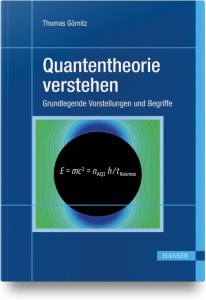
Preface to the book
We humans are currently facing a situation that requires a fundamental rethinking. A population of about 8 billion has to rethink its handling of the goods of the earth if it wants to survive as a civilization. This includes the improvement of the organization of the relations, a fair participation in the material and cultural goods, as well as for each human being the possibility of acquiring a consciousness, with an universal education, culturally and scientifically .
Energy and above all matter cannot be “ created „. Of course, different manifestations can be transformed into each other. But, for example, it is currently pointed out that building sand is becoming scarce because the sand from the Sahara cannot be used for concrete.
In fact, so far, we use for ourselves only a small part of the energy that reaches us from the sun. This energy not only concerns solar cells; wind and waves are also ultimately powered by the sun. There is still a lot of „room for improvement“ in terms of their utilization.
For some chemical elements, however, let’s take phosphorus as an example, the well exploitable deposits are limited. Phosphorus is irreplaceable for every living being because of its share in the genome and as a component of the energy supplier adenosine triphosphate in the cell. Since phosphorus therefore also forms an important part of fertilizer, the formerly wasteful use of it has already been considerably curtailed. Science had provided an insight into connections that were not obvious. For example, the reduction not only in detergents and cleaning agents has already led to a decrease in the eutrophication of water bodies caused by too much phosphorus.
Mankind is confronted with the task of having to change its actions. However, this will only be possible if our understanding of reality continues to improve. This will only be possible with the help of science, and it will make it easier to limit an excessively wasteful use of natural resources.
On the basis of fundamental research, it should also become possible to better understand the consequences of the consequences as well as the material, energy and information processes and cycles, right down to their global interrelationships. Even the seemingly inexhaustible reserves of air and water are far from being as harmless as had been believed for a long time.
Since matter cannot be increased, an economic behavior based on a permanently growing consumption of material goods is impossible.
Such a growing consumption has however so far been assumed as a basic postulate in the understanding of „economic growth“ and has been understood as an all-healing fetish. Similarly, fertile soil, which is the basis for food, is not readily recoverable or even increasable.
Thus, a new view of reality becomes necessary, one that expands an overly narrow view of reality.
From many presentations in the fields of natural science, from physics to brain research, one can get the impression that there is basically nothing other then the reality of the material that natural science has to deal with. Thus, however, the social and intellectual influences on reality and thus also on nature remain largely in the background or are completely ignored. In the book the fundamental interrelations of reality are reflected upon in detail. This is done mainly on the basis of quantum theory, the best and most accurate account of reality.
In addition to the scientific and natural-philosophical focal points, the mathematical relationships are also incorporated into the text. However, a broad verbal presentation is given to all mathematical explanations, so that an overview of the basic ideas can be gained even if one only skims the mathematical foundations.
In the following, the basic structures of the quantum theory are introduced and expanded on. Using them this allegedly „incomprehensible“ or even „crazy“ theory becomes comprehensible. So the book is about an understanding of what quantum theory means for our view of nature and of ourselves. As I know from my own experience, because of the abundance of material to be taught, such aspects are very difficult or impossible to accommodate in the normal lecture on quantum mechanics.
With the quantum theoretical foundations, a scientifically founded view of the whole of reality is presented. It encompasses ideas ranging from cosmic evolution through the smallest particles of matter to the human psyche.
Certainly, in our present civilization, many people are convinced that a change in behavior is urgently needed. Unfortunately, appeals for ethical behavior alone achieve little. This is especially true when they have to compete against an apparently „scientifically based“ mainstream that assigns the psychic, and thus also the spiritual, a far subordinate role behind the reality of the material. At least, consumerism as well as many ideas about the inner nature of man and his embedding in cosmic events cannot invalidate this impression.
The insight into an evolutionary process, which leading from the beginning of the cosmos via life to human consciousness, clearly shows that a dualistic world view, i. e. a „coexistence“ of spirit and matter, may facilitate a pragmatic handling of reality and thus have a practical benefit, but never a fundamental importance. There must be a common basis for both – and it is precisely this basis that quantum theory can provide. This is proposed in the book in terms of natural science and also natural philosophy. We intend to approach the underlying mathematical and physical structures step by step in the present text.
Many people will perhaps feel the same as I do. Technical developments and scientific findings amaze us and facilitate many things in our daily lives. The results of scientific research make it possible to quickly develop new vaccines. Some diseases are becoming curable that we were previously powerless to treat.
On the other hand, we are justifiably concerned about the next generations and global inequalities. We are confronted with a global economy that does not indicate that the insight into the limitedness of material and energetic resources on earth has already become the guiding principle of economic action.
Despite the aforementioned technical applications of quantum theory, it is difficult to avoid the impression that political and economic action is still largely based on a world view that draws its basic scientific convictions mainly from the great developmental advances of classical physics. And there are still extensive attempts to fit quantum theory into this mathematical structure.
Even a cursory glance at the intellectual historic contexts of the 20th century reveals two opposing tendencies.
On the one hand, a utopia described as materialistic (or naturalistic), which was characterized above all by a denial of the reality of the spiritual as well as by the suppression of people’s needs for freedom.
On the other hand, one can detect the opinion that not only our ideas and views are our mental constructions. Indeed, they are. However, if the material or biological bases are also declared to be merely social or psychological constructs, this makes an access to reality very difficult.
In science we are therefore challenged to clarify a separation between images of reality and distorted images.
At present we experience in western culture an enormous progress in the application of scientific knowledge and at the same time in the political realm an overestimation of the material, i. e. economic driving forces, which is connected with an underestimation of ideological and cultural, i. e. spiritual human drives.
The natural science of the 21st century enables us to achieve a „Copernican turn“ in the understanding of nature, as it is often so beautifully formulated in featured articles. (Although Copernicus had so little public impact in his time that for more than half a century it was not considered necessary to have his book banned by the Inquisition.)
Thanks to developments in quantum theory, it is now possible to accept in natural science what we take completely for granted in our everyday lives:
Not only the factual material circumstances, but also our mental conceptions, our cognitions and expectations as well as the possibilities which have not yet become facts. All this information which is meaningful for us influences our actions.
These self-evident facts can only assume their due place in the natural science of the 21st century and be accepted in it and in philosophy.
Quantum theory has led to the realization that the basis of reality was and is created by evolution from an absolute quantum information. Such quantum information, it turns out, is equivalent to matter and energy and forms the very basis of reality.
Our everyday life is filled more and more with events and utensils, which would have been perceived not so long ago as magic or with what one would have called a report like a fairy tale or a lie. ( Lies because at that time even a term like „fake news“ would not have been on everyone’s lips). Jules Verne’s „Journey to the Moon“ was once science fiction; for half a century it has been a thing of the past and will probably soon be topical again. The magic mirror: „Who is the fairest one of all“ is perhaps called „Instagram“ today?
I believe that hardly anyone who uses these technical devices thinks of „quantum theory“, a field of physics that has existed for a century and which made all this possible in the first place.
Many people are not aware that, for example, electronic watches, cell phones, flat screens, control systems for cars and solar cells and, of course, the Internet with all its good and threatening possibilities would be completely impossible without the knowledge gained from quantum theory.
All the devices in medicine and especially in brain research, where extensive knowledge about states and processes inside the body and also in the brain can be obtained even without a surgical intervention, are also unthinkable without applications from quantum theory. The fact that today parents can know before birth whether a child will be a boy or a girl is probably no longer a surprise to anyone. That the technical development already makes operations on the unborn possible, may perhaps nevertheless come as asurprise.
Quantum theory results have not only changed our everyday life, quantum theory also requires a change in the way we think about reality.
Even in serious presentations, one often uses as a basis for explanations of quantum phenomena images and experiences learned from inanimate everyday objects. And then one realizes with astonishment that quanta can behave completely differently.
What can help us to better understand those processes in nature in which the action of quanta must be taken into account?
One conclusion is obvious:
Getting to the bottom of the actual foundation of the natural sciences required intensive research work. It will be presented here. It lies on this basis that we can change our views.
Only what we have understood can help us to react better. Everything we do not understand merely gives us a certain feeling of helplessness.
A famous German philosopher once wrote:
I maintain, however, that in any particular natural doctrine only so much actual science can be encountered as there is mathematics to be found in it. For according to the foregoing, real science, especially of nature, requires a pure part, which lies at the basis of the empirical, and which is based on knowledge of natural things a priori.
In this thesis by Immanuel Kant (1724-1804) much is claimed and against it certainly much resistance will continue to arise. But today, 200 years later, we recognize that there is more truth behind this assertion than could be known at that time.
The specific sciences consider partial areas of nature. However, if it concerns the bases, then „the whole“, the cosmos, is to be included. Today we recognize in the cosmos an evolution from very simple structures through life up to a society of people with language and a highly complex social system.
Mathematics as the science of possible structures is an indispensable design tool at least for that natural science which deals with the simplest structures, i. e. for physics. Without mathematics there is no physics. One can represent and explain physical structures in language. However, a real and deeper understanding is probably impossible without mathematics.
Without the physical fundamentals, chemistry would not be able to explain its relational structures and laws of formation. Biology, on the other hand, would be limited to the description of phenomena and behaviors without these two sciences.
On the basis of the simple structures, these natural sciences and all the other sciences then develop their respective independent laws.
Thus, the more complex the structures become, the more complex the attempts to find new correlations with mathematical support become. After all, finding correlations is not the same as discovering actual dependencies and causalities.
Biology, in particular, has so far rightly pointed out that for it a scientific understanding of the action of information is necessary.
With the basis of quantum theory presented here, the classification of information into the framework of natural scientific quantities takes place.
The quantum theory is the most accurate part of physics. This high level of accuracy has as a consequence that with a quantum particle, as for example an electron, for the mathematical description of its state infinitely many numbers are necessary. This is already true for massless objects like a light quantum. This alone shows that quantum particles are very complex entities.
In contrast, for the mathematically and physically simplest of all possible quantum structures, two numbers are sufficient to define the state of such a simplest possible quantum structure.
These mathematically and physically simplest structures are absolute Bits of quantum information, AQIs, and as yet free of any special significance.
An actual foundation for quantum theory, and thus for physics and the other natural sciences, can now be constructed on the basis of absolute and cosmologically grounded quantum information. In the book it is shown how from them the complex structures, which are described by physics, can be generated.
This statement means a similar challenge to our imagination, as the transition from the geocentric to the heliocentric world view may have been. All the evidence indicates for the movement of the sun around the earth. Although we have preserved this image in language until today, because a sunrise is so convincing and a sunset can be so impressive, the scientific description and explanation compels us to reverse this idea.
In the Middle Ages, it was not even possible for many people to learn to read and write. Now, on the other hand, it is easier to learn enough science to understand why the earth revolves around the sun. Since it also rotates around its own axis, there is the appearance of a daily movement of the sun around the earth.
Today we are recognizing more and more clearly: Behind the obvious reality of the material natural science shows a quantum information structure.
Following explains what has already been achieved in this way and what still has to be done by the following generations of scientists.
Such new insight at the same time permits us to say goodbye to the too narrow conceptions of quantum physics as „microphysics“ and as „ensemble physics“, which have spread through quantum theory.
This makes quantum theory understandable – and new fruitful insights arise from actual understanding.
Of course, it remains true that microscopically, with atoms and molecules, no reasonable results can be obtained without quantum theory. And it remains equally true that probability statements can only be tested with statistics, that is, only with sufficiently large ensembles. These ideas become wrong if they are made absolute – as was often the case in the past. For example, some time ago one could read in physical publications that statements about a single atom were nonsensical. For some time now, experiments with single atoms and ions have been carried out as a matter of course. Previously, the explanatory focus for quantum theory was on the passage of many tiny particles or light quanta through a narrow double slit. It is time that also those quantum experiments enter the textbooks that deal with quantum systems that extend over far more than a thousand kilometers without splitting into parts.
The image of „quantum theory as microphysics“ had so far made it so difficult to open up space not only for the ideas of „quanta as small spheres“ but also for the fact that quantum structures can be thought of as immeasurably extended in some situations.
While the new images are not easy to convey, on the other hand, the mathematical structures have been known for a long time. Just as Kepler was able to use the existing mathematics of ellipses to supersede the old pictures of circular planetary motions, so mathematics is helping now to open up more accurate ideas about reality.
In mathematics much of the necessary preliminary work has been done. It would remain, however, as if it were in the airless space of the virtual structures if it is not applied with physics to the events in nature. Without mathematics, however, physics remains powerless and merely descriptive. It cannot then have an explanatory effect. To come to this realization also philosophical thought processes are necessary. Through reflection it can become clear what the terms and structures mean.
One of my younger grandchildren asked me what „tree“ means. I first explained to him that the „tree“ is a living thing. Then I started with the whole tree and broke it down through description into trunk and roots, with bark, branches, leaves, flowers and fruit. A still further breakdown into molecules and atoms and to even smaller things would probably at this point become too complicated for him.
This explanatory procedure fits with a well-known finding that is surprising in its continuation: since ancient times, many philosophers and physicists have expressed the idea that „smaller“ would also be „simpler“.
However, the history of quantum theory reveals the opposite of this notion. In contrast to it, after the threshold, which can be identified with the chemical atoms, the further and further trodden path into the spatially small leads to ever more complicated instead of simpler theories.
Since „explaining“ is generally understood to mean constructing something complicated out of something simple, or at least reconstructing it from something simple, „real explaining“ means starting with what is „really simplest“. These are the AQIs mentioned.
Here is a short description:
An AQI is so simple that no property, i. e. no special meaning and no special place in the cosmos, can be assigned to it. It can be visualized as a vibration spread throughout space. Mathematically and physically, they can be defined as quantum bits. Special structures such as localized particles are only possible with a large number of them.
First, what can be said about quantum theory in general?
Quantum theory only became necessary and unavoidable when experiments and theories had become very exact.
● Quantum Theory turns out to be the physics of exactness.
The unfortunate term „uncertainty“ in the context of quantum theory complicates this insight.
● Quantum theory turns out to be the physics of relationships.
Relations establish the emergence of something new, of wholes, of structures which are more than the sum of their parts. One can even formulate this:
● Relational structures become object structures and, in the case of living beings, also become structures of meaning.
Quantum theory further shows that beyond facts, even possibilities that have not yet become facts can already produce effects.
● Quantum theory turns out to be a physics of possibilities.
Occasionally, completely false misconceptions about quantum theory can be found. They are statements of the type, „A spinning top can rotate clockwise or counterclockwise, an electron rotates in both directions at the same time.“
This assertion about the electron is, according to grammar, a statement about facts. If statements about facts contradict each other, they are not „alternative“, but are implausible or just nonsense. In response to such inadequate pictures, quantum theory is often said to be incomprehensible. But shouldn’t we be able to understand the best and most accurate theory we have?
● The important thing about quantum theory is that it does not formulate statements about factual states, but statements about possibilities.
Only when you measure the electron and thus force it to go into a factual state, does it turn either to the left or to the right – exactly as logic demands. Thus, as long as the electron is not forced into a factual state, it possesses at the same time the possibility of rotating to the right or to the left. And this is neither a contradiction nor is it incomprehensible.
The fact related to the statement about possibilities, is that quantum theory requires a new „philosophy of time“. This change is even more fundamental than those that have resulted from the two theories of relativity.
The book reflects on what should and can be inferred from the basic structures of quantum theory.
Albert Einstein (1879-1955) had the vision at the end of his life as a researcher that the basis of physics could show itself in a structure which corresponds in its concrete execution to what is presented here.
Carl Friedrich v. Weizsäcker (1912-2007) was the first to open the way to such a program and who published much about it in the German-speaking world. Many years later Archibald Wheeler (1911-2008) proclaimed the thesis „It from Bit“ which became formative in the English language area – however without going beyond of the too narrow frame of „quantum physics = microphysics“ and the ideas connected with it.
Half a century of further reasearch work has now gone into such a foundation. The book intends to take its readers along the path that leads from the scientifically recognizable foundations of reality to the current theories.
Thereby it is shown how far and with what successes the program to reconstruct physics from cosmologically founded absolute quantum bits has already been done.
The researcher’s urge to understand better and better what underlies phenomena, how nature works, and how we can explain all this, is the main motivation in the development of natural sciences. Glowing iron radiates. Max Planck (1858-1947) wanted to understand how such radiation occurs. The necessary combination of electrodynamics and thermodynamics led him inevitably to quantum theory.
Quantum theory and general relativity theory are connected at the black holes. The necessary concatenation of these two theories led inevitably to the inclusion of quantum information in physics.
The inclusion of quantum information as the foundation in physics represents a fundamental change from that science in which I myself and most of my colleagues were trained.
Subsequently, there was a difficulty in writing this book. Creative new ideas are demanded on all sides, and at the same time it is desired that they be presented in a very simple way – in a manner suitable for oral or mental presentation, as it were. They should be imaginative, but also confirm established ideas. In order to cope with such a squaring of the circle, a glance at mathematics is helpful. Squaring the circle is impossible; it would require considering infinitely many digits of „π“. At the same time, we come to the realization that such an impossibl task can, after all, always be approached approximately, as well as circumstances require. Therefore, in many places, the book besides the underlying mathematical structures of the new physics, explains in detail at the same time how they can be understood.
For decades, my scientific activity has been primarily directed at exploring the basic principles of nature and, in particular, those of physics. This also includes to present the quantum theory as understandable as possible without becoming incorrect.
It is correct that the research on the basis of nature should lead to the „simplest structures“.
As quantum theory shows, the simplest structures are by no means the spatially smallest particles.
„Quantum theory“ is a term that can be split into two parts. Therefore, we should first briefly reflect on what „theory“ means in natural science and specifically in physics. Afterwards we go over to the „quanta“.
What is a theory?
In physics, a theory comprises a mathematical structure as well as an interpretation of the terms used, i.e., the meaning of the words and their direct and indirect measurement possibilities.
With a theory it should become possible to describe the further course of the considered system from observed, measured or postulated initial values.
Thus, a theory is based on presuppositions about what is to be described and the mathematical structure used.
Thus, classical physics postulates a description of facts or of facts whose exact values are unknown, and which are therefore treated with classical probability theory. Outside of thermodynamics, classical physics ignores the real passage of time. In such deterministic structures the possibility arises to calculate from a given point of time in the same way into the past as into the future.
A theory always incorporates knowledge about the data of the systems under study. Thereby the accuracy is important, which can be reached at the given point of time. The predictions can become only as good as the determined data agree with the nature.
The history of physics has shown that more accurate observation of nature has led to the need to replace theories in some areas where previously people had long believed in their unqualified validity. The most significant examples of such extensions and replacements are special and general relativity and quantum theory.
The idea, believed for a very long time, that Newtonian mechanics should be understood as the proven basis of the description of nature had been erroneous. At very large velocities, at a very exact description of gravity and at a very exact description of matter, the special and the general relativity theory as well as the quantum theory take the place of the classical physics.
These examples compel to a certain caution, if outside of mathematics one speaks of „proofs“. Only in this science one has the premises in hand and is not dependent on their agreement with nature. If in the natural science one speaks of proving, then it is to be reminded of the fact that first an as exact as possible comprehension of nature is necessary, in order to arrive then with mathematics at a good theory. However, since it is not yet possible to know what has so far eluded our knowledge, i.e. what might be found in the future, and therefore to what extent the premises agree with nature, attention to domains of validity of theories is important.
The theories of which one knows and can estimate where their predictions become too inaccurate can be called “ closed theories „. In their areas of validity, however, they will remain valid in the future. Thus, also in the future the orbits of rockets will be calculated with Newtonian mechanics, if it is enriched with some additional terms from general relativity.
The most exact and best description of nature is given by quantum theory. For it no limit of its range of validity is recognizable so far. The general relativity theory becomes wrong at the temporal beginning of the cosmos and inside of the black holes, because this classical theory does not cover quantum effects thereby.
Now about quanta
Until today one can hear or read about the quantum theory, it is crazy or its „bizarre laws“ are at least incomprehensible. It is a special case only for the „smallest“, it has raised the „fuzziness“ to the principle and has nothing to do with the normal everyday life.
After more than a century, it is now really time to cut off such old braids.
In the exploration of nature, mathematics acts like a „thought amplifier“. This already began in antiquity and finally led with Galilei and Kepler for the first time to the calculation of natural processes with mathematical models, which we still use today.
Of course, the mathematical structures of quantum theory are beyond what one usually learns in school. However, the underlying principles are neither crazy nor far from our everyday experience!
What is meant by „quanta”?
The quanta can be divided into four types of structure:
Quanta with a rest mass
Quanta with a rest mass can be found in a certain area of space for a certain period of time.
They include the protons and neutrons into which atomic nuclei can be broken down, and the electrons which form the „atomic shell“ and which are responsible for the chemical properties even of molecules.
Up to now no limit for the mass of such quanta has become known, to which the atoms and also ever larger molecules can be added on. Today, quantum properties, such as an indeterminacy of location, have been demonstrated with molecules with a mass of about 25000 hydrogen atoms.
The quanta with rest mass are often called the „building blocks“ of the matter because of their properties. Unfortunately, a „block picture“ caused with it can lead to conceptions which provoke a contradiction to the quantum theory.
Quanta without a rest mass
Quanta without a rest mass we know so far only as the quanta of the light, the photons. They move in vacuum always with the speed of light. Because of this maximum speed between emission and absorption they are isolated from the content of the cosmos. Therefore, the photons are also decoupled from the cosmic course of time and remain without an inner time. If photons slow down, e. g. in a glass, they resume their vacuum velocity afterwards (if they were not absorbed in the glass).
Quanta without real existence
Particularly interesting are quanta which exist only „according to the possibility“ and not as facts. They are also called „virtual particles“. Such objects have no correspondence in classical physics.
These particles, which exist only potentially and never in reality, include, for example, phonons, sound quanta in crystalline solids, or quarks, which can never appear in a vacuum because they form only internal structures, e. g., in protons.
Quanta, which form the basis for everything
The multiplicative relation structure of the quantum theory will be discussed later. Here it is only mentioned for the time being. The tensor-product structure of quantum theory composes complex systems from simple ones by multiplicatively combining the dimensions of the state spaces. (In classical physics this is done additively).
This suggests that the simplest of the possible quantum structures must have a state space that is two-dimensional.
This is a much simpler structure than the „particles“ previously used as the basis for describing nature, or the quantum fields constructed from them. After all, the state space of even the simplest particle in quantum mechanics is infinite-dimensional.
The kinds of real simple structures are often referred to as „quantum bits.“ However, the term „bit“ associates with „information“ and information, in turn, associates with „meaning.“
A bit can carry meaning if it is a property of an object, e. g., a dot within a text on a paper or on a screen. Then C. F. v. Weizsäcker’s dictum is true, if with the term „information“ only „meaningful information“ is meant. Then (and only then) information is „relative“ because it lies between „two semantic levels“.
This becomes different, if it is about the absolute, about the cosmos as a whole and no more about parts in it.
An absolute, because cosmically defined quantum bit, what is meant without a material or energetic carrier, is abstract, thus still without any specific meaning.
Such absolute, because related to the cosmos bits of quantum information, AQIs, are the mathematically simplest possible structures and the basis of all appearances.
Protyposis
In order to prevent misinterpretations of AQIs, it was necessary to introduce a term for it, which should not cause inaccurate associations: Protyposis, the pre-coined.
An absolute, because cosmically defined quantum bit, what is meant without a material or energetic carrier, is abstract, therefore still without any specific meaning.
Such absolute, because related to the cosmos bits of quantum information, AQIs, are the mathematically simplest possible structures and the basis of all appearances.
 Goernitz Understanding Quantum Theory